Last 3.
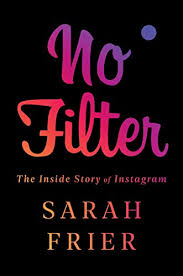
No Filter by Sarah Frier
This may be for you if: you've ever been curious about Facebook's practices, the societal impact of social media, or want to read for yourself just how small the world actually is.
There's a chance you could have been a curated pick away from having your life changed. Instagram has influenced millions. Sometimes that influence has been for the better - turning hobbies into careers and adding creativity to how we communicate, and other times it has been for the worst - encouraging alternate realities and adding pressure to self-expression. What's clear from Sarah's writing is that from launch to where Instagram is now has been a journey of identity challenges, tough trade-offs, and at times ruthless parenting.
Sarah gives a fantastic, hyper-detailed account of how it all went down. From the inevitable entrepreneur from Stanford, Kevin Systrom, and his co-founder Mike Krieger's early immigration struggles to fireside acquisition talks, and 1 billion users. As we approach a decade of operations, Instagram is as relevant as ever and is increasingly in talks of being an all-time great acquisition - not to mention a target of major anti-trust concern from politicians.
Formula: Child + Parent - Competitors = Paranoia. You're constantly told a story from two closely-knit companies and everyone else.
Double Down: Trust Me I'm Lying: Confessions of a Media Manipulator by Ryan Holiday.
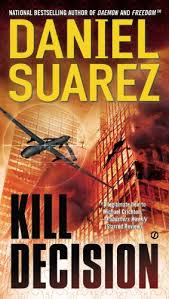
Kill Decision by Daniel Suarez
This may be for you if: you're fascinated by advanced robotics, ethical dilemma's, and ants?
Kill Decision. This was a thriller that I couldn't put down. It's a must read if you want to imagine what happens when you accelerate the capabilities of advanced warfare just a bit more. Autonomous drones on their lonesome is a tough topic to consider. Now project the idea of commodity hardware and algorithms based on a certain type of animal in our animal kingdom. You get an incredibly interesting tale of a spec-ops team and the obscure scientist they've recruited to help solve a thread from an unknown adversary.
Daniel Suarez takes you on a sci-fi journey that doesn't feel too far away. Suarez gets major points for creativity in engineering this story, bringing biology and technology together. This is the definitive, most creative computer modeling I've witnessed.
Formula: Drones + AI + Unknown Enemy = Suspenseful thriller with a few bio-related creative inputs.
Double Down: To this day I'm wondering. Perhaps Ready Player One by Ernest Cline.
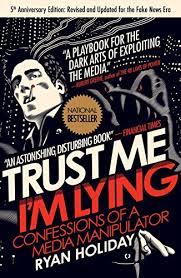
Trust Me I'm Lying: Confessions of a Media Manipulator by Ryan Holiday
This may be for you if: you've ever been curious about how to start an outlandish story that generates PR and clicks for your site. Just kidding.
Using fake emails and doctored stories to spark initial coverage from lesser-known bloggers. Each blog and potential story regardless of its validity sparks interest from the next bracket of bloggers and outlets, eventually attracting coverage from major news corporations. Even if the story was false, there's always that small section for editorial corrections or what not. But no one reads those.
Ryan Holiday gives more than a perspective, he gives a literal playbook for how to manipulate media. The idea isn't to advocate media manipulation, it's hopefully to help the industry reckon with it's insatiable business incentives and increasingly loose QA practices that often result in unintended consequences. The truth is well, terrifying and makes this a must read for anyone wanting to read a thrilling story about how fake news came to be and how the digital fire will continue to burn as incentives remain the same. Hint clicks.
Formula: The Fake News Playbook. You Don't Want to Read This.
Double Down: Bad Blood by John Carreyrou.
Favorites.
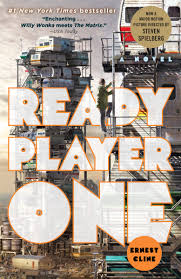
Ready Player One by Ernest Cline.
This may be for you if: you've been saying every year for the past 10 that its VR's moment.
Some of my favorite moments are when writers help take your imagination a few years forward. Can you imagine a world where for some, video games become a better alternative to the reality than reality itself? I may not think it's as much of a stretch as some, but without the visual storytelling of Ernest Cline, it would be a lot less imaginable.
Cline plays the role of a world builder in crafting this fictional thriller. Ready Player One has all the enjoyable elements of an engaging read, an antagonist corporation with characteristics tied to traditional monopolies, and what we all dream of when playing video games.
The beauty about this type of fiction is that we can borrow these ideas and place them in our fantasy road-maps. What if education for some was built around a virtual experience? Could fields trips be in Giza? How well could we really get to know our international classmates? It's okay to get a little creative in our thoughts, sci-fi may indeed help shape the future.
Formula: A Fortune at Stake + VR Rigs + Greedy Corporations = Heavy competition for the greatest prize in this fictional world. The Oasis.
Double Down: Kill Decision by Daniel Suarez. Also watch the Ready Player One movie directed by Steven Spielberg.
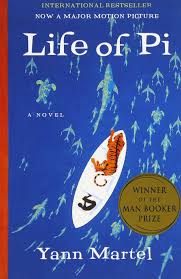
Life of Pi by Yann Martel
This may be for you if: you’ve heard of Bernie Madoff, Enron, or subprime mortgages or you’re wondering what’s being done to fix healthcare.
Life of Pi is a remarkable story that serves the reader an incredible and thoughtful plot despite a circumstance that doesn't feel like it has much to offer. As you progress, the character development never falters. You're taken through the journey of a teen boy who has just experienced a major tragedy and now faces what must feel like an infinite obstacle with incredibly finite supplies and an unpredictable companion. As the boy survives, the reader is getting an incredible depiction that leaves them with the ability to imagine themselves as this boy and ponder deeper thoughts, or simply enjoy the mental ride. This is what I consider the true magic of the writer and this particular story.
The ability to read this book on any level makes it special. There is certainly an opportunity to transcend the pages and use your imagination, working towards your personal spiritual inclinations. There's also the opportunity to read through and just enjoy the adventure.
Formula: A Boy + A Boat + A Tiger = Two parallels that you are left to ponder.
Double Down: Watch the award winning (four academy awards) movie directed by Ang Lee.
Skunk Works by Ben Rich & Leo Janos
This may be for you if: you're fascinated with stealth aircraft's and highly classified operations.
Retired in 1999, the Blackbird aircraft still holds the world record for the fastest air-breathing manned aircraft (set in 1976). Skunk Works was where cutting aircraft innovation took place. It was so much more than a secretive, elite group within Lockheed Martin. Skunk Works was about bringing together some of the brightest minds in science and engineering in an R&D environment not bound by the traditional mechanics that slow innovation.
This book, co-authored by Ben Rich, the second Director of Lockheed's Skunk Works, takes you into the process of Skunk Works. Rich shared all the history you need to know (and are currently privileged to) about Skunk Works from the culture to the groundbreaking innovation and extenuating circumstances of operating a classified R&D shop during the Cold War. A remarkable read.
Formula: Cold War + The Nation's Finest Engineers + Loose Management = Remarkable aeronautical engineering & key moments for the U.S. military history.
Double Down: Kill Decision by Daniel Suarez.
Tech.
How the Internet Happened by Brian McCullough
This may be for you if: you’re a little late to the software scene or may have gone a little too deep as an engineer.
A must read for anyone interested in tracing the roots of today’s biggest trends. Don’t worry about networking protocols, this book is light on the technicals. How the Internet Happened takes you from the first web browser, an initial introduction to Marc Andreessen, to AOL & Yahoo! where business models were born but not adapted, a stop by eBay for a lesson in e-commerce and trust, the Dot-com peak and subsequent bust, introductions the garage dwellers who brought academia to search, a mention of Mark Zuckerburg, and leave you with Steve’s most notable contribution.
How the Internet Happened does a phenomenal job addressing all the details (again high-level) during the timeline covered. Expect information on business model pivots, mergers & acquisitions, and bankruptcy filings. Having grown up in the early 2000s and largely behind the early adopters, this awesome read brought me up to speed and quick.
Formula: Detailed history + Tech we know - Academic jargon = Path way for you and I to think about the future.
Double Down: Swipe to Unlock by Mehta, Agashe, Detroja
Bad Blood by John Carreyrou
This may be for you if: you’ve heard of Bernie Madoff, Enron, or subprime mortgages or you’re wondering what’s being done to fix healthcare.
This time it’s Jennifer Lawrence, not Ashton Kutcher (it’ll make sense in a second). Bad Blood is the story of Elizabeth Holmes and Theranos. ex- Stanford prodigy and Steve Jobs cult-follower, Elizabeth Holmes creates the iPhone of blood-testing under the former Silicon Valley unicorn Theranos. What she doesn’t tell you or her investors is that the test results were a little fudged and well it wasn’t exactly her hardware. John Carreyrou from the Wall Street Journal breaks the story in one of the greatest examples of investigative journalism the world has experienced.
A few big names... Larry Ellison Oracle’s co-found, David Boies the prosecutor famous for the Microsoft antitrust case and representing the NFL, Jerry Jones, and Harvey Weinstein, and James Mattis a former U.S. Secretary of Defense.
A few big investors… The Walton family (Walmart), Rupert Murdoch (21st Century Fox), Betsy DeVos (current U.S. Secretary of Education), and the Cox family (Cox Media Group).
A few big companies… Safeway, GlaxoSmithKline, Pfizer, Cleveland Clinic, and Walgreens.
Formula: $10 Billion Valuation + A Top Lawyer = One of the Greatest Stories of Deception in Silicon Valley.
Double Down: Enron: The Smartest Guys in the Room
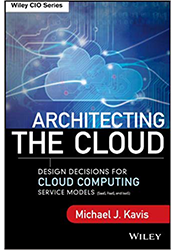
Architecting the Cloud by Michael J. Kavis
This may be for you if: you’re in the market for a crash course in technology consulting or Netflix is down and you have some free time.
Cloud. In the cloud. Move to the cloud. Undoubtedly a top 5 tech buzzword but also a key concept in understanding the business of IT. Kavis starts off with a history lesson and brings you right to the different flavors (delivery models) of cloud computing. After IaaS, PaaS, and SaaS the book dives into topics a Deloitte consultant would advise. You’ll learn about building the business case, data, security, auditing, and plan B amongst others. These pain (jargon) free perspectives are well supported will examples such as Instagram, Netflix, and oh the Obama campaign.
Formula: CTO many times over + Buzzword = A complete understanding and foundation to think about IT now.
Double Down: Swipe to Unlock by Mehta, Agashe, Detroja
Finance/Econ.
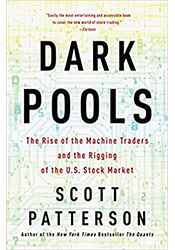
Dark Pools by Scott Patterson
This may be for you if: you distrust Wall street or if you’re wondering why $Lyft trades on average 4.7 million times a day.
Imagine Jordan Belfort from Stratton Oakmont. If the name isn’t familiar how about Leonardo DiCaprio from The Wolf of Wall Street. Picture brokers dialing phones and shouting orders. This is when there was still a human element in trading securities. Now, the famous exchanges are sparse and trading entirely automated. Dark Pools takes you back to the origination of ECN’s or electronic communication network, detailing how these networks evolves and the implications they have on financial markets today, especially with the idea of AI looming.
Scott Patterson introduces Joshua Levine a pioneer in the computerization of financial information and other key characters who founded and in most cases ended up selling their companies to the large exchanges and brokerages we are most familiar with today like the NASDAQ or NYSE.
Formula: Computer Networks + Speed + Money = The differences of $/second have radically changed finance and face uncertainty and the technology continues to evolve.
Double Down: How the Internet Happened by Brian McCullough
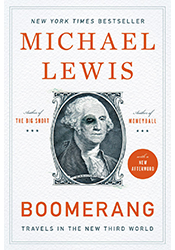
Boomerang by Michael Lewis
This may be for you if: your understanding of the financial crisis is equal to bailing out American banks or you’re interested in what happens when irrational behavior comes in the form of countrywide get-rich-quick schemes.
At least one of these titles has to wring a bell… Liar’s Poker, Moneyball, The Blind Side, The Big Short, or Flash Boys. Those are a few of Michael Lewis’s books and there’s some key themes to take here. Finance, economics, strategic evolution, and a little greed.
"The financial crisis of 2008 was suspended only because investors believed that governments could borrow whatever they needed to rescue their banks. What happened when the governments themselves ceased to be credible?"
Boomerang talks the “collapse of entire countries,” taking readers to Iceland, Greece, Ireland, Germany, and California. Each country (excluding Germany) and California have a problem of their own. The unsuccessful transition of Icelanders to Investment Bankers, Greek government jobs that spare no expenses except yet ready to settle up on their country’s platinum card, Irish borrowing from Irish, Germany well...being Germany, and agree or disagree with former governor Arnold Schwarzenegger - California has a serious political problem. Michael Lewis travels to each of these countries and tells his experience having spoken with the people on the ground. Expect questionably financed material habits and alarming debt statistics.
Formula: Award Winning Author + Free Money = A Lesser Told Crisis.
Double Down: Economics in One Lesson by Henry Hazlitt
Triple Down: The FED and Lehman Brothers by Laurence M. Ball
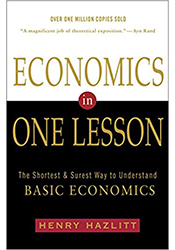
Economics in One Lesson by Henry Hazlitt
This may be for you if: you’re between the aisle and wondering about economics or if it seems like every 3rd new update is about the U.S. and China.
Lessons in taxes, machinery, full employment, tariffs, driving exports, saving industries, stabilizing commodities, government price-fixing, rent control, minimum wage laws, unions, buy backs, inflation, and savings to name a few. This is some serious economics. Hazlitt believes major government's economic policies are influenced, if not “wholly determined” by the acceptance of economic fallacies. You’ll get over 20 examples of understandable and consensus challenging information.
Time’s have obviously changed since the books first edition went live in 1946, namely increases in globalization. As with original economic thought, the ideas discussed (criticized) in this book are still in place today across the world.
Formula: Contentious Topics + Economic reasoning = A Thought Exercise and Some Dinner Topics.
Double Down: The Invisible Heart by Russell Roberts
Personal Development.
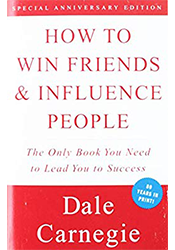
How To Win Friends & Influence People by Dale Carnegie
This may be for you if: you’re part of the sample that checks their phone 52 times/day or you’re starting to realize that we are our best when helping each other.
Perhaps the most famous self-help book. This book is filled with simple principles that we forget about and can seriously benefit from. “Don’t criticize, condemn, or complain.” “Become genuinely interested in other people.” While the list of principles is long, the point is not to embrace them all at once, but rather be cognizant and begin applying them in your life. As with most self-help books, it is about incremental progress that compounds over time.
Formula: Timelines Principles + “Nine Suggestions to Get the Most Out of This Book" = “Getting More Out of Life!”
Double Down: Never Eat Alone by Keith Ferrazzi
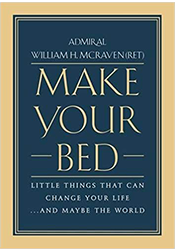
Make Your Bed by Admiral William H. McRaven
This may be for you if: you’re in the market for what feels like the 10 commandments for being your best self or you’re a UT Austin grad who was lucky enough to witness Admiral McRaven’s commencement speech and want to relive it.
- CHAPTER ONE: Start Your Day with a Task Completed
- CHAPTER TWO: You Can’t Go It Alone
- CHAPTER THREE: Only the Size of Your Heart Matters
- CHAPTER FOUR: Life’s Not Fair - Drive On!
- CHAPTER FIVE: Failure Can Make You Stronger
- CHAPTER SIX: You Must Dare Greatly
- CHAPTER SEVEN: Stand Up to the Bullies
- CHAPTER EIGHT: Rise to the Occasion
- CHAPTER NINE: Give People Hope
- CHAPTER TEN: Never, Ever Quit!
Formula: “10 Commandments” + Examples Delivered by a Navy Admiral = Self-Help in Another Light
Double Down: Anything. Now is your time.
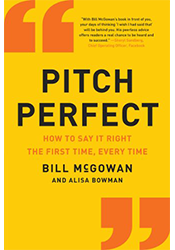
Pitch Perfect by Bill McGowan and Alisa Bowman
This may be for you if: you see communication as a weakness and want to be able to grow as a professional or you recently graduated from college and thought buzzwords landed you the job.
I thoughts the larger and more complex my vocabulary got, the better. It took an interview with a former McKinsey consultant to realize I couldn’t have been more wrong. This book both teaches and reinforces simple techniques to make you a better communicator. It’s a swift read with personnel examples from Bill’s experience working with top-tier professionals across a variety of domains. Bill also happens to be a two-time Emmy Award winner and experienced TV professional.
Formula: No Points for Jargon + 7 Principles of Persuasion = A Template for Verbal and Nonverbal Mastery
Double Down: Steal Like an Artist by Austin Kleon